
Compare / Staging ·
Virtual staging vs empty room photos: when empty is the right call
Virtual staging is the right move on most vacant listings — but not all of them. A practical guide to the cases where empty rooms actually photograph better, and the budget reasons to choose one over the other.
The default is staging — but not always
For most vacant listings, virtual staging is the right call. Empty rooms photograph small, cold, and uninformative. Buyers can't read scale from an empty space, they read absence as missing-something, and the listing competes against neighbors that show furnished rooms with the same square footage but a clearer narrative.
But the default isn't universal. Some listings photograph better empty, and some sellers have practical reasons to skip staging that aren't about budget. Treating the question "stage or don't stage?" as automatic costs the listings where empty was the right move.
When staging is the obvious win
The home is vacant. The rooms are well-built but unfurnished. The architecture is good but generic enough that furniture would help the buyer's imagination land.
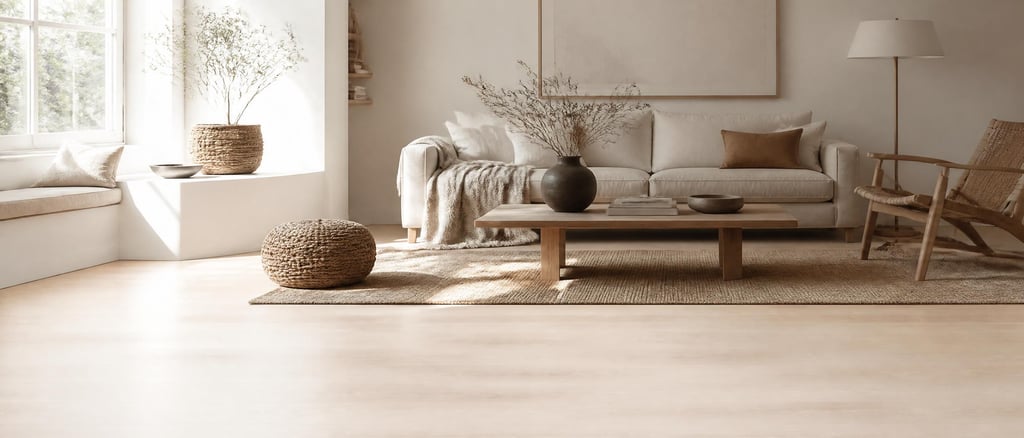
Virtual staging adds what isn't there. Sofa where the sofa would go, bed where the bed would go, rug pulling the dining area together. Each room arrives at the buyer with a starting point for picturing their own life inside the existing walls.
The photographs improve in obvious ways. Scale becomes legible — the buyer can read room dimensions because the furniture provides a reference. Light reads warmer because the furniture and textiles absorb and reflect ambient light. The listing card on a search grid stops looking like a sales floor and starts looking like a home.
For most vacant residential listings in the $300K–$2M range, this is the answer. The math on virtual staging is dramatically favorable to the math on empty photos.
When empty is the right call
Investor and flip targets. Buyers shopping the property as a future renovation or rental rarely want staging — it suggests the seller is selling the photo rather than the bones. An empty kitchen photographs as "ready to redo." A staged kitchen photographs as "someone's vision you'd have to undo." For these buyer pools, staging actively reduces appeal.
Listings with signature features that staging obscures. A 1920s craftsman with original built-ins, a mid-century home with intact terrazzo and a sunken living room, a loft with exposed trusses and a 14-foot ceiling — these are properties where the architecture is the value. Virtual staging on the photo can crowd out what the buyer is actually paying for. The empty room makes the bones visible.
Properties where rendered furniture would mislead about scale. Unusual proportions, very narrow rooms, double-height spaces — virtual staging on these can produce frames where the furniture appears smaller or larger than it would be in life, even when correctly scaled in the render. The buyer's expectations on walkthrough get violated. Honest empty photos prevent the surprise.
Pre-renovation listings. Homes that will be renovated by the buyer — particularly land or shell deals — are sold on potential. The buyer wants to see the empty space and project their own design. Staging the photo of a property a buyer will gut is misalignment between what's shown and what's bought.
The middle case: staged hero, empty interiors
The cover photo and a few key interior frames get virtual staging; the rest of the gallery shows empty rooms. This is common in luxury and in mid-tier where the seller wants the click-through impact of a staged hero but doesn't need every secondary bedroom dressed.
This works when it reads as deliberate rather than uneven. The convention is: cover photo plus living room and primary bedroom are staged, secondary bedrooms and bathrooms run empty. Buyers who reach the gallery understand the visual hierarchy without an explanation.
The honest economics
Virtual staging at premium tiers costs roughly the same as physical staging for a month, but the math is per-image rather than per-room. Twelve photos virtually staged costs about the same as one room physically staged. For a vacant listing where physical staging isn't being considered anyway, the relevant comparison is virtual-staging vs no-staging — and virtual almost always wins.
The exception is the case where the seller can credibly show the empty home in person, and the in-person walkthrough is what closes the deal. Luxury vacant homes with strong architectural features often fit this profile — the listing photos do less work than the showings do.
How to make the call
For each room, ask two questions: what's the photo's job? and what's selling the home?
If the photo's job is to get the click — convince the buyer to schedule a showing — staging usually helps. If the photo's job is to document the property accurately for buyers who'll decide on the walkthrough, empty often suffices.
If what's selling the home is the life inside the unit, stage. If what's selling the home is the bones, the architecture, or the potential — show the bones.
The companion reads
- The full pre-listing sequence: How to stage a home for sale — staging budgets by price tier, and where empty fits in the ladder.
- The other side of the staging coin: Virtual staging vs physical staging — when to skip both and rent real furniture.
- The Vestaro virtual staging tool — by room, by style, with disclosure language baked into the export.
Frequently asked
Do empty homes really sell for less than staged ones?
Industry surveys from NAR consistently report shorter days-on-market and modestly higher sale-to-list ratios on staged homes, with the largest effect on vacant listings. The numbers vary by market and price tier, but the directionality is consistent: empty is the default state buyers price down, staged is the state that earns the premium. Virtual staging captures most of that lift at a fraction of the cost of physical staging.
When is showing the empty photo actually better?
Three cases: (1) the listing is a flip or investor-target where the buyer pool actively prefers the blank canvas; (2) the home has architectural or material features that staging would obscure (vaulted ceilings with exposed trusses, signature original tilework, custom built-ins); (3) the seller cannot disclose staging accurately and would rather show truth — for example, a property with unusual proportions where rendered furniture would mislead about scale.
Can I show a mix — staged living room, empty bedrooms?
Yes, and it's often the practical move. Stage the rooms where buyers most need help imagining a life (living room, primary bedroom, kitchen). Show secondary bedrooms empty if staging them adds little. The mix needs to be coherent — don't stage half a room and leave the other half visible — but room-by-room decisions are fine and don't trigger disclosure problems.
Does empty-and-bright beat staged-but-dim?
Yes. A vacant room shot in good light with proper exposure beats a staged room shot in poor light. Staging compounds whatever the photograph started with — good photos get a lift, bad photos don't get rescued. Spend the first dollars on photography fundamentals (light, tripod, exposure), then layer staging on the resulting strong photos.
About the author
Vestaro Studio
The editors at Vestaro
The Vestaro studio publishes guides on real estate photography, virtual staging, and the business of selling a listing through the photos that lead it. Pieces are written by the team — photographers who shoot listings, engineers who train the staging models, and agents who use the output to close deals — and edited together before they ship.
We write from the field rather than from a content calendar. When a guide references a price, a turn-time, or an MLS rule, that number reflects what the team has observed across the listings we render each week. Where a topic touches a market we don't sell into, we say so.